
Caregiving at Home
Everyday care at home.
Support with personal care, daily routines, mobility and companionship, respecting independence and preferences at home.
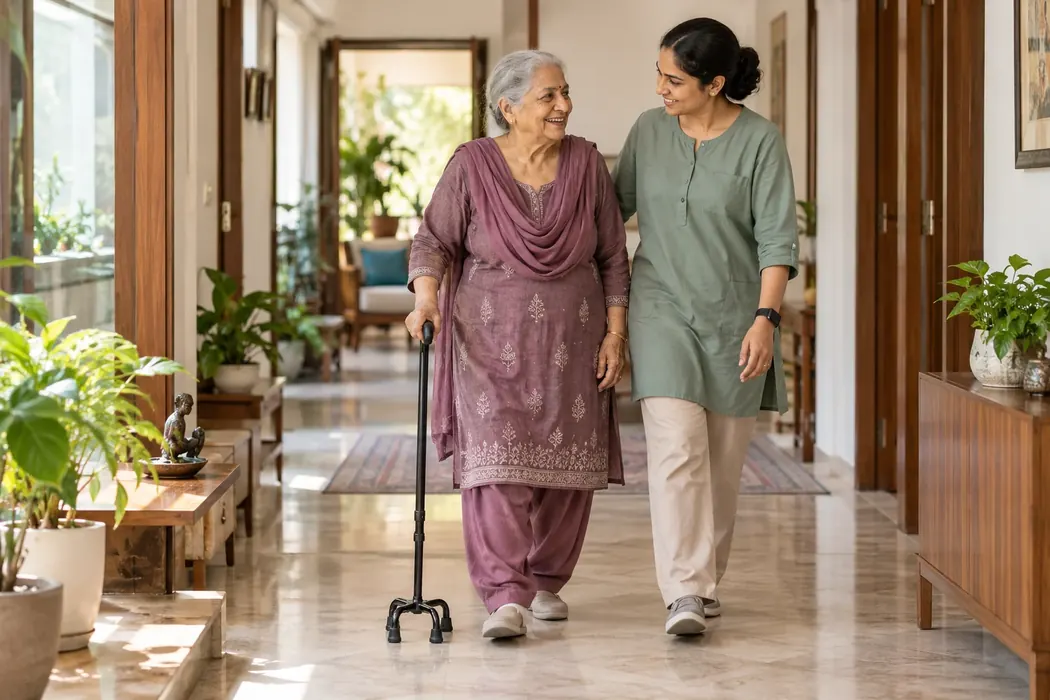

Personal care & daily living
Sometimes, the little things need a little help.
Caregiving at home can make everyday routines easier when someone needs assistance. We begin by understanding where support is needed and what the person is comfortable doing for themselves.
- Bathing, grooming and oral hygiene
- Dressing and personal hygiene
- Toileting and continence assistance
- Feeding and hydration
- Support with daily routines
- Hospital or diagnostic accompaniment, where agreed
Personal care may include help with bathing, grooming, oral hygiene, dressing, toileting and continence, feeding and hydration. Assistance should respect privacy, preferences and independence wherever safely possible.
The care plan defines the activities included, so the individual and the family know what support to expect.
Mobility & transfers
Getting up, moving between rooms or changing position can require assistance. Caregiving support may include walking, transfers and repositioning, within the person’s assessed needs and the caregiver’s scope.
Where mobility requires rehabilitation or clinical input, professional support is separate from everyday assistance.
Explore Physiotherapy & RehabilitationCompanionship
A conversation. A walk. Reading together. A memory activity. Having someone around.
Care is not only physical. For seniors living alone or recovering at home, familiar routines and social engagement can be an important part of the day. Companionship is included according to the agreed care plan, rather than assumed to look the same for everyone.

Medication & routine support
A little help keeping the day on track.
Everyday routine support
Caregivers may support prescribed medication routines through reminders and observation, as defined in the care plan. They can also help with the everyday routines around meals, hydration, personal care and appointments.
Clinical care requires a professional
A caregiver does not diagnose, prescribe or independently change medical treatment. Medication administration and clinical procedures requiring a qualified professional must be handled as professional healthcare services.
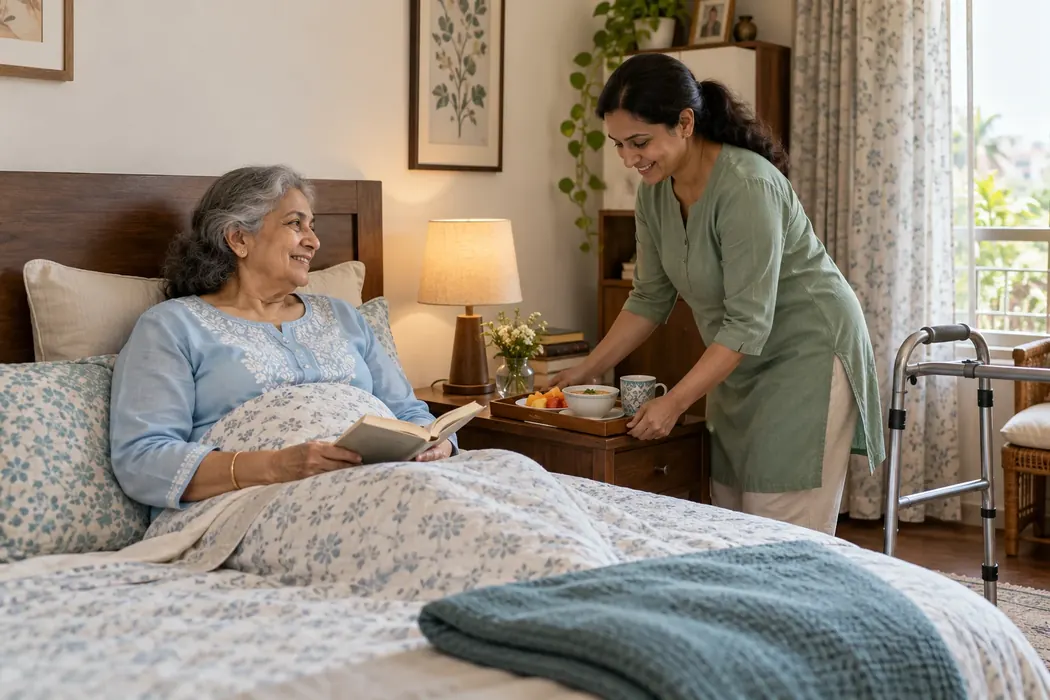
Recovery at home
The journey home needs support too.
After hospitalisation, a family may find that day-to-day life needs more planning than before. Moving around the home, maintaining hygiene, eating meals and attending follow-up appointments may all require help.
A caregiver can assist with these everyday activities and support family communication during recovery. This is non-clinical assistance; nursing, medical consultations and physiotherapy are arranged separately where appropriate.
We start by understanding the person’s needs and the support the family is already providing, then discuss the care required at home.
Explore Post-Hospitalisation Care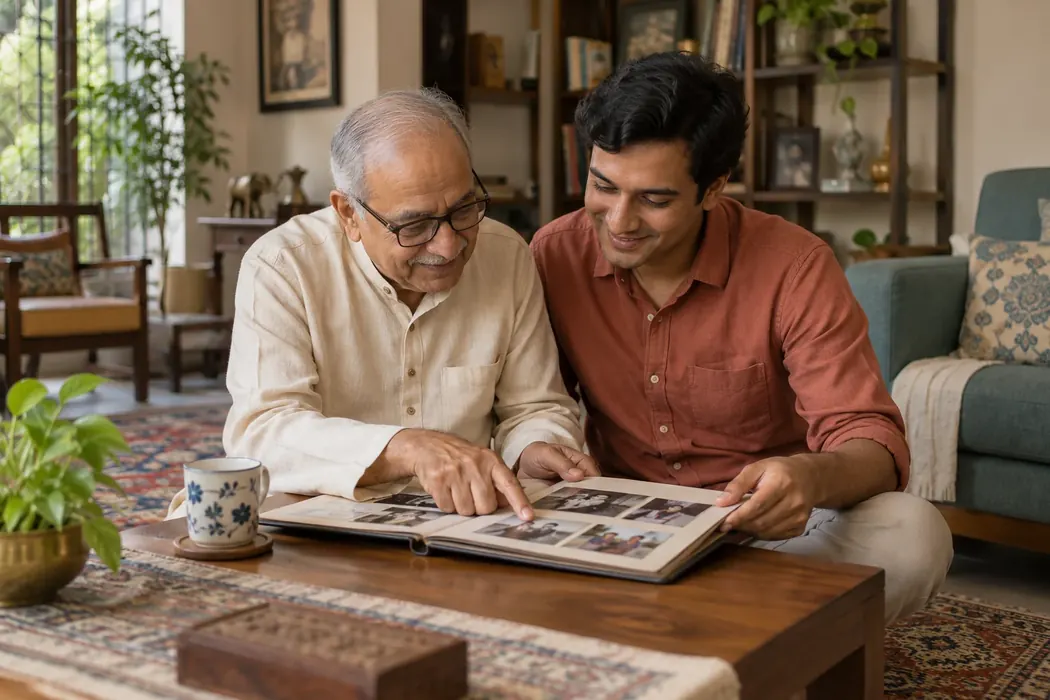
Dementia & long-term support
Familiar routines. Respectful assistance.
Some individuals need ongoing help rather than short-term assistance. This may include support with daily routines, personal care, companionship and supervision for a person living with dementia, where the assessed care needs and available support are appropriate.
Safety, dignity and family
The person’s safety, dignity and family involvement remain central. Dementia-related or long-term care needs should be discussed individually; a caregiver is not a substitute for a clinician’s assessment or treatment.
Agreeing the support
Tell us about the support already in place and where additional help is needed. The scope and duration of care are agreed after understanding the situation.
A typical day may look like
Care that follows the rhythm of home.
This is an illustration of everyday caregiving, not a fixed schedule or a promise that every activity is included.
Morning
A supported start
Help with getting up, personal care, dressing, breakfast and the agreed daily routine.
During the day
Assistance and companionship
Support with meals, hydration, mobility, reading or conversation, according to the person’s preferences and care plan.
Evening
A familiar close to the day
Assistance with the evening routine, comfort and communication with the family, as agreed.
What caregiving means
Clear boundaries build trust.
Support with daily life
At Beside & Beyond, our CareGiver service provides compassionate, day-to-day support at home: personal care, daily living assistance, companionship, and recovery support.
- Personal care and everyday assistance
- Mobility and routine support
- Companionship and social engagement
- Medication reminders and observation
- Accompaniment, where applicable
Not included in CareGiver service (Non-Medical)
It does not include clinical or medical care. Home nursing, doctor consultations, physiotherapy, diagnostics, medical transfers, and equipment support are available as separate, coordinated services.
- Medical diagnosis, treatment, or medical advice
- Nursing care such as wound dressing, injections, IV therapy, or catheter care
- Administering medication or adjusting dosages
- Physiotherapy or rehabilitation sessions
- Emergency medical treatment or ambulance response
- Heavy lifting, home repairs, or major modifications
- Financial, legal, or guardianship decisions
- Overnight or 24-hour care, unless separately arranged

Who may benefit
Support for different family situations.
Caregiving may be helpful for a senior living alone, someone who needs assistance with daily activities, a person returning home after hospitalisation, or a family unable to provide full-time support.
The amount of help needed can vary. Some families are exploring daytime assistance; others need longer hours or continuous cover. Availability, duration and the suitability of an arrangement are discussed during assessment.
Explore Care PackagesYour questions
Questions about care at home.
Answers to questions families often ask.
What is the difference between a caregiver and a nurse?
A caregiver provides non-clinical daily support, such as personal care, mobility assistance and companionship. A nurse provides clinical care within their professional scope. The appropriate support depends on the individual’s assessed needs.
Can I arrange caregiving after hospital discharge?
Post-hospitalisation assistance can be discussed as part of the care requirement. A caregiver may help with everyday routines, while nursing and other clinical services are considered separately where needed.
Can I request 12-hour or 24-hour support?
You can discuss the hours and duration needed with the care team. Any arrangement, including continuous cover, is subject to assessment, availability and agreement on the scope of care.