
Clinical & Recovery
Professional care at home.
Explore nursing, doctor consultations and physiotherapy at home, with support guided by individual care needs.

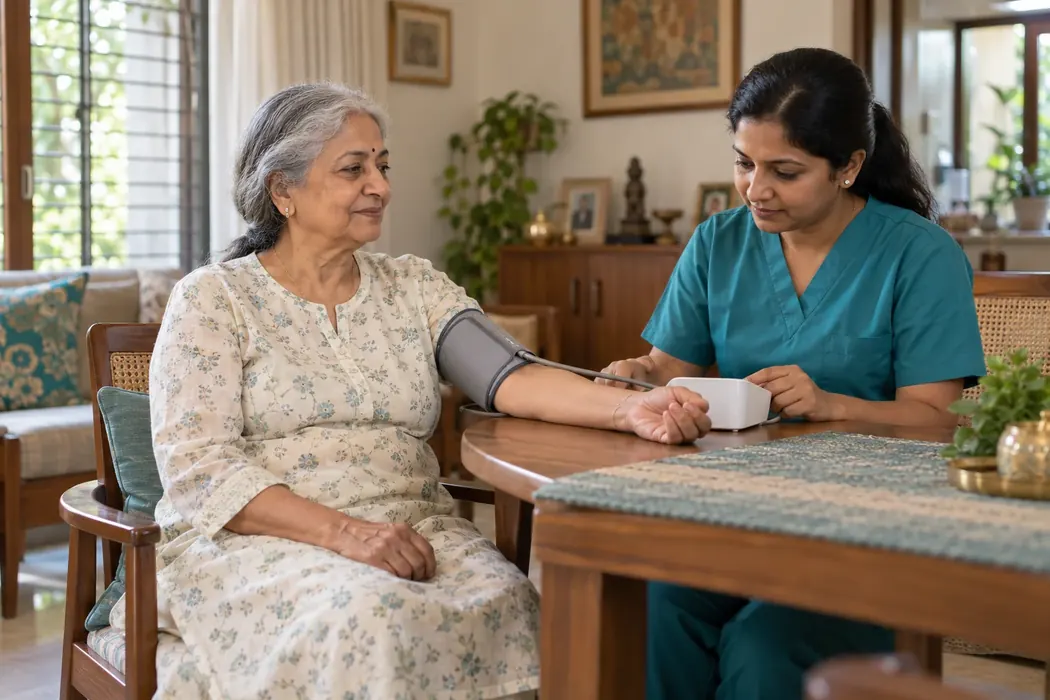
Home nursing
Skilled nursing support at home.
A person recovering from surgery or managing an ongoing health condition may need clinical care alongside everyday assistance. Home nursing is discussed according to the individual’s requirements, professional assessment and the suitability of care at home.
- Post-operative nursing care
- Wound and dressing care
- Vital monitoring
- Prescribed medication administration
- Injections, where appropriate
- Catheter-related care
Where professionally appropriate, nursing support may include the following. The actual scope is agreed for the individual and delivered by a suitably qualified professional.
Doctor home visits
A consultation at home may be useful when travel is difficult for an older person or someone recovering from illness. Support may include geriatric assessment, chronic condition management and medical consultations.
Specialist consultations or tele-consultations can be discussed where available. Diagnosis and medical decisions remain with the qualified medical professional, not with a caregiver.
The care team can help you understand the consultation requirement and confirm the options available for your location.
Physiotherapy & rehabilitation
Recovery is not only about getting better. It is also about getting back to everyday living.
Physiotherapy support can address mobility and rehabilitation needs, including neuro and orthopaedic rehabilitation where appropriate. The physiotherapist assesses the requirement and guides the rehabilitation approach.
Therapy needs, frequency and suitability should be determined by the professional. Recovery differs from person to person, and no particular outcome is guaranteed.

Post-hospitalisation care
From hospital to home, with a plan.
Returning home after a hospital stay can bring a new set of challenges. Families may be arranging daily assistance, following care instructions and coordinating appointments at the same time.
Beside & Beyond can help bring the appropriate support together around the individual. That may mean a caregiver for personal care and routines, a nurse for clinical tasks, a doctor for medical decisions, or a physiotherapist for rehabilitation.
The purpose is to make each person’s role clear—not to assume that a single care worker can meet every requirement.
- Mobility and personal care
- Meals and everyday routines
- Medication routines within the right professional scope
- Follow-up appointment coordination
- Family communication as agreed
- Separate clinical support where required

Medication & health monitoring
Clinical tasks need clinical oversight.
Professional nursing care
Medication administration, vital monitoring and clinical observation may form part of a nursing care plan when appropriate. The requirement should be reviewed in relation to the treating clinician’s guidance and the professional’s scope.
Everyday caregiver support
This is different from a caregiver offering medication reminders or noticing a change in an everyday routine. Caregivers do not independently prescribe, alter medicines or make treatment decisions.

Dementia & long-term support
A coordinated approach to ongoing needs.
Long-term care can involve both daily assistance and professional healthcare. A person living with dementia or another ongoing condition may need support with routines, supervision and family coordination, alongside clinical review where appropriate.
Understanding existing support
We begin by understanding the care already in place, the person’s day-to-day needs and the family’s concerns. This helps distinguish what can be supported through caregiving and what requires a qualified professional.
An individually assessed arrangement
The care arrangement should reflect the assessed requirement and available services, rather than a general promise of specialised care for every condition.
Know your care team
The right professional. For the right need.
These roles work alongside one another. They are not interchangeable.
Caregiver
- Daily living
- Personal assistance
- Companionship
- Routine support
Nurse
- Clinical care
- Vital monitoring
- Prescribed medication
- Wound care
Doctor
- Medical assessment
- Diagnosis
- Medical decisions
- Treatment guidance
Physiotherapist
- Rehabilitation
- Mobility assessment
- Therapy and exercise
- Recovery support
An overview of roles only. Each service depends on assessment, professional scope and availability.
Explore Diagnostics & Medical SupportCaregiver service limits
Medical Caregiver service — key exclusions
Our Medical Caregiver service supports recovery and daily care at home under an agreed care plan. It does not replace a doctor, nurse, physiotherapist, or emergency medical service.
View non-medical CareGiver exclusions →Clinical care not included
- Medical diagnosis, prognosis, or treatment decisions
- Doctor consultations, prescriptions, or changes to a treatment plan
- Complex wound care, including surgical wounds, pressure sores, burns, or diabetic ulcers
- IV therapy, infusions, injections, or insulin administration
- Catheter, tracheostomy, drainage-tube, central-line, or ventilator care
- Physiotherapy, rehabilitation, or specialist therapy sessions
- Emergency medical treatment, hospital admission, or ambulance response
Skilled tasks such as injections, IV therapy, complex wound care, and catheter care require a licensed nurse or other qualified clinician.
Medication support limits
We do not prescribe, supply, alter, or independently administer medicines.
Support is limited to reminders, helping the client follow a prescribed routine, and reporting concerns to the family or healthcare team.
Medication administration or oversight requiring clinical judgement is outside this service.
Daily-care and logistics exclusions
- Long-term custodial care when skilled nursing is not required
- 24-hour or overnight care, unless separately arranged
- Grocery shopping, banking, bill payment, or handling client money
- Housekeeping beyond basic tidying, laundry, and meal-related support
- Transportation for personal errands, unless included in the care plan
- Childcare, pet care, or services not documented in the care plan
Your questions
Understanding professional care.
Answers to questions families often ask.
How do I know whether we need a caregiver or a nurse?
Start by describing the support needed. Daily living assistance is different from clinical tasks such as wound care or prescribed medication administration. The assessment helps clarify which type of professional support is appropriate.
Can nursing and physiotherapy form part of a care plan?
They can be discussed as separate professional services alongside caregiving. The scope, schedule and availability need to be confirmed for the individual.
Does care at home replace emergency treatment?
No. Home care is not a replacement for emergency medical treatment. In a medical emergency, seek appropriate emergency services and hospital care immediately.
Where can I explore the care options?
The Care Packages page introduces the different care levels. These are a starting point for discussion; the actual plan is based on the person’s needs and professional assessment.